April 3, 2026
Lowering internal body temperature during heat stress is the key to decreasing metabolic dysfunction.
Research shows that internal body temperature is the driving factor in negative physiological responses during heat stress events. Ambient Temperature Humidity Index (THI) provides an indication of conditions when heat stress can occur (THI > 72), but an elevated body temperature is what initiates metabolic dysfunction— driving health and performance down. A dairy cow’s high metabolic rate and large size challenges their efficiency at dissipating heat on their own (Zhu et al., 2020). The result can be a cascade of negative metabolic and performance outcomes.
At what THI do dairy cows experience heat stress?
The Temperature Humidity Index (THI) combines air temperature and relative humidity into a single heat-load score. Dairy cows begin to feel heat stress at a lower THI than many other animals, and high-producing cows are the most sensitive. Thresholds vary with breed, milk yield, and housing, but the general ranges below show when to expect trouble.
| THI range | Heat stress level | What happens to the cow |
|---|---|---|
| Below 68 | None (comfort zone) | Maintains normal body temperature, intake, and milk yield. |
| 68–71 | Mild | Respiration rate rises; early, often unnoticed dips in intake and milk. |
| 72–79 | Moderate | Body temperature climbs; feed intake and milk yield decline measurably. |
| 80–89 | Severe | Marked drops in intake, milk, and fertility; welfare is at risk. |
| 90 and above | Danger / emergency | Risk of severe distress and death without immediate cooling and support. |
These bands are a general guide; published THI thresholds vary by source, breed, and production level.
Negative metabolic outcomes due to high internal body temperature
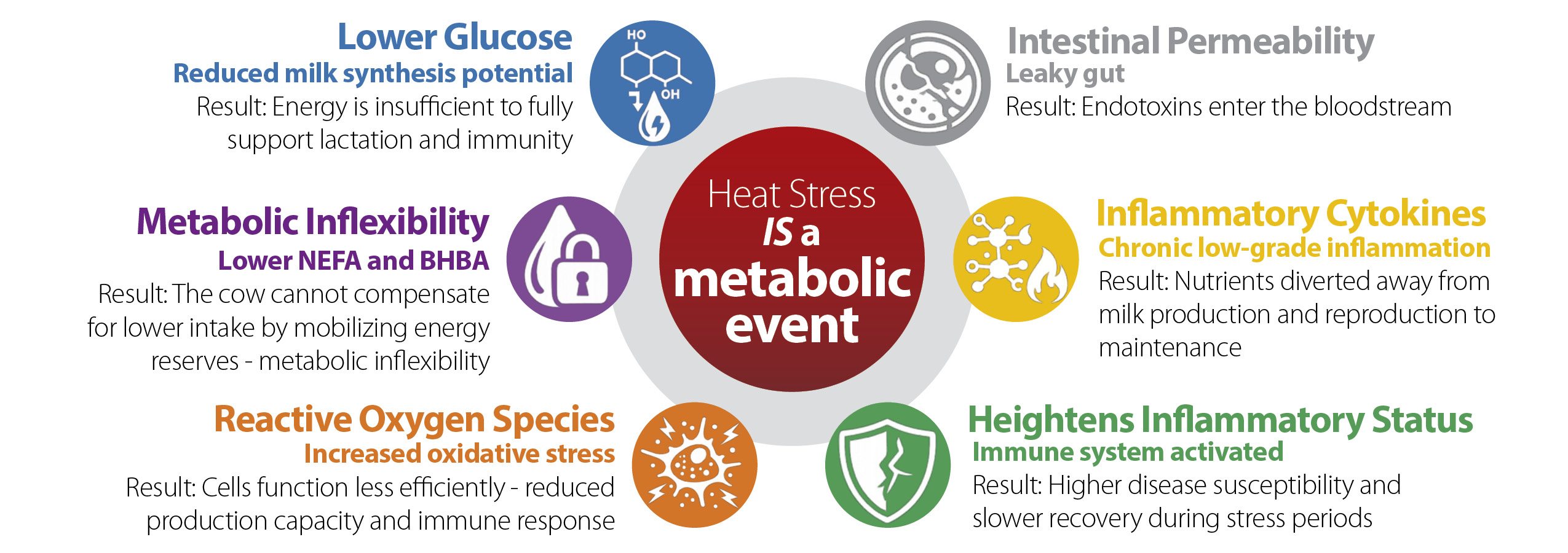
Figure: Heat stress is a metabolic event. As core body temperature rises, dairy cows experience lower glucose and reduced milk-synthesis potential, intestinal permeability (leaky gut), metabolic inflexibility (lower NEFA and BHBA), inflammatory cytokines and chronic low-grade inflammation, reactive oxygen species and oxidative stress, and a heightened inflammatory immune status.
Elevated body temperature is a metabolic disrupter.
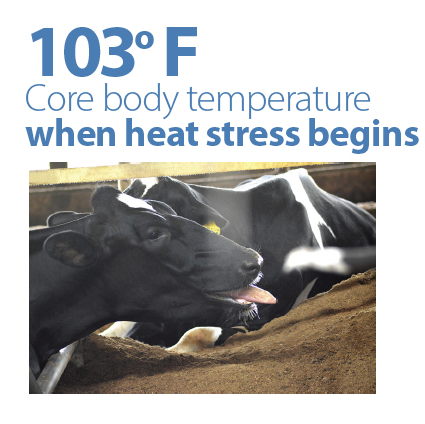
With a core temp. of 103º the cow tries to cool herself…
- Increased respiration and sweating
- Blood flows to skin for heat dissipation
- Reduced blood at internal organs
- Rumen, intestinal and liver perfusion
- Decreased nutrient absorption, rumen buffering and weakened gut barrier
- Feed intake drops
- Metabolism diverted from production to survival
- Reduced milk synthesis and metabolic flexibility
- Increased REDOX and immune suppression
- Lower milk yield, pregnancy rates and more days open
…yet her body is still generating more heat.
Bovine BlueLite® is proven to lower body temperature.
Results from a 4-week University of Florida research study demonstrated reduced body temperature, improved dry matter intake (DMI), and energy corrected milk (ECM) responses in heat stressed cows in a commercial setting. 52 cows were enrolled in the study and allocated to four groups (13 cows per group). 26 were housed with heat‑abatement equipment (fans or soakers), the other 26 had access to shade only. Within each housing condition, cows were further divided into two treatments: supplementation with Bovine BlueLite in the TMR or no supplementation (Control). Results reported below focus on the groups provided shade only.
Trial summary
The Bovine BlueLite supplemented group showed a clear advantage over the unsupplemented group in lowering rectal temperature over the trial period. BlueLite supplementation also showed DMI and ECM advantages over the unsupplemented group. Additionally, the combination of abatement with Bovine BlueLite further enhanced the positive effects on DMI and ECM.
Results of supplementation with Bovine BlueLite:
Lowered rectal temperature > 1˚F on average over unsupplemented cows (Fig. 1)
Improved DMI by 4.2 Lb/d over unsupplemented cows (Fig. 2)
Improved ECM over 6.7 Lb/d compared to unsupplemented cows (Fig. 3)
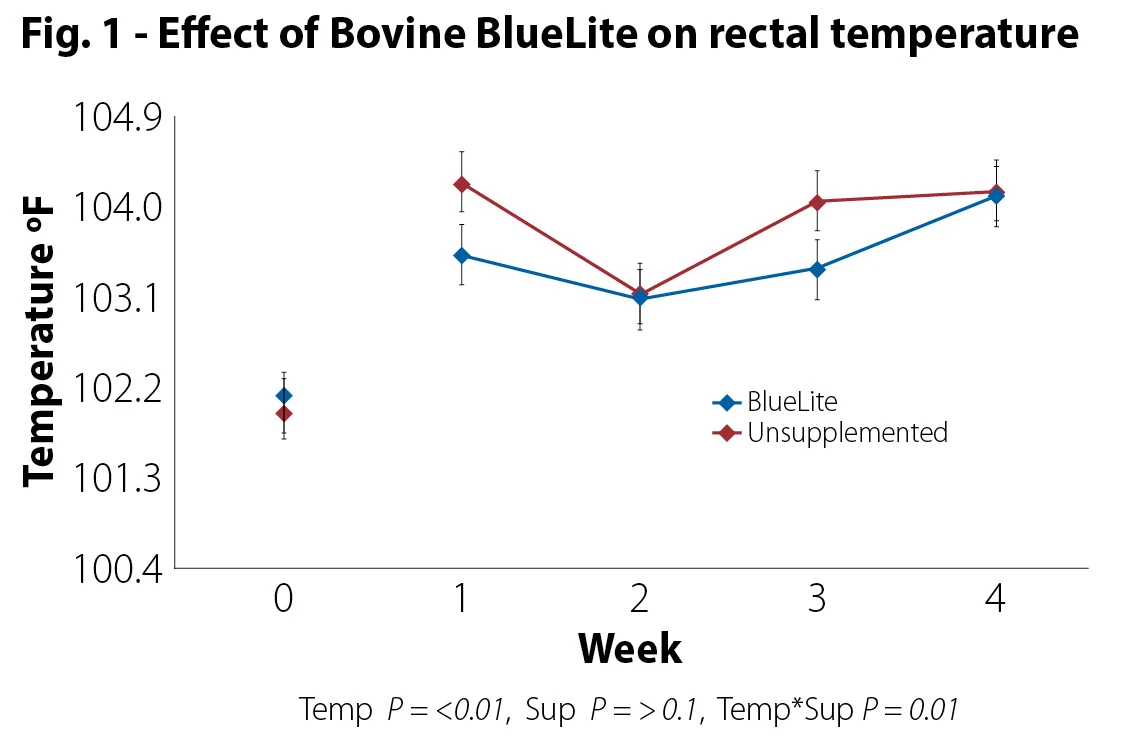
Figure 1. In a University of Florida trial, Bovine BlueLite–supplemented cows averaged rectal temperatures more than 1°F lower than unsupplemented cows over the four-week period (Temp P < 0.01).
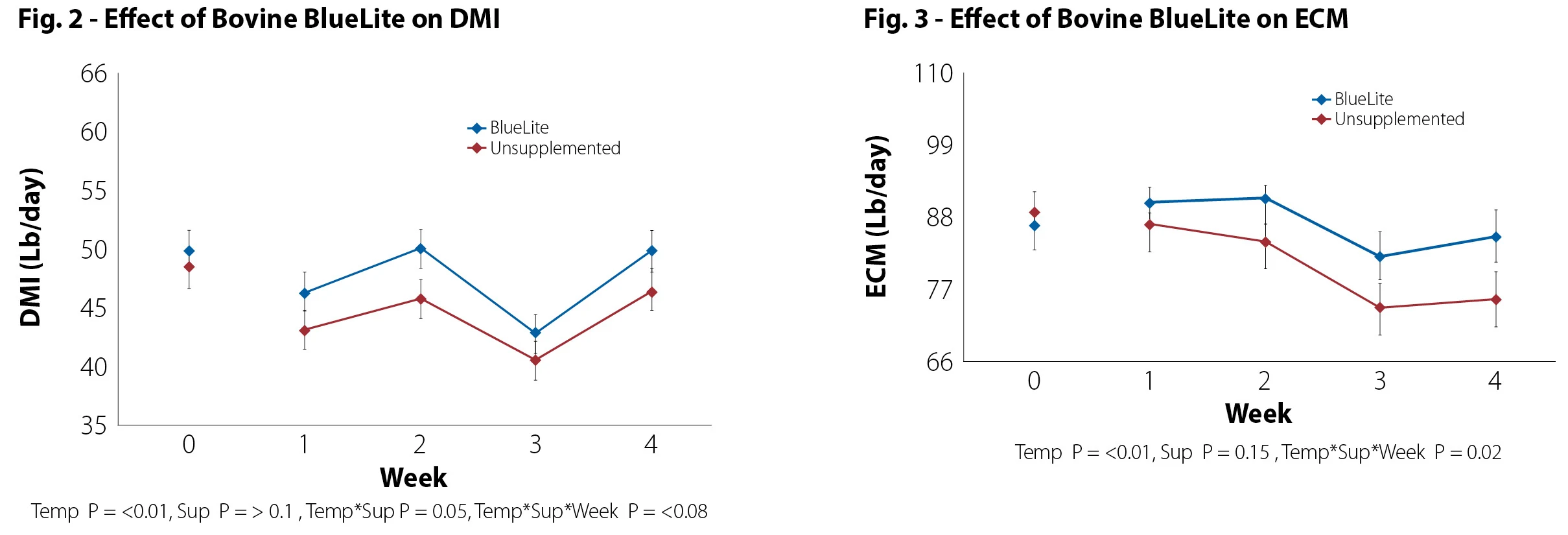
Figures 2 and 3. Bovine BlueLite-supplemented cows showed roughly 4.2 lb/day higher dry matter intake (Fig. 2) and 6.7 lb/day higher energy-corrected milk (Fig. 3) than unsupplemented cows.
Effectiveness in lowering body temperature
Research conducted at the University of Puerto Rico demonstrated reduced body temperature and improved milk yield responses in heat stressed cows in a commercial setting. Not only did the Bovine BlueLite supplemented cows have an increase in milk production (2.3 lbs./d) they also had a reduced body temperature (0.6ºF, P<0.01) when the THI was the highest (Fig. 4).
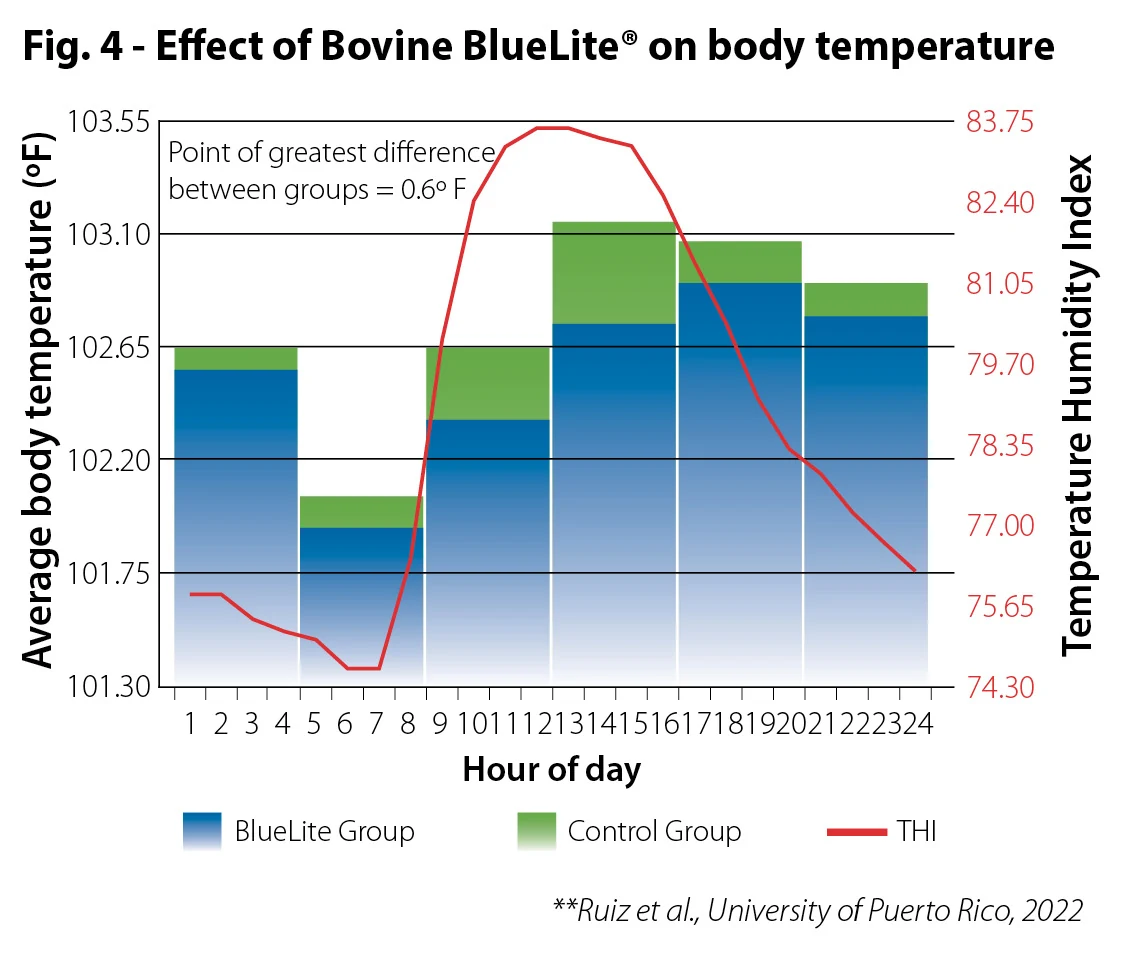
Figure 4. At the University of Puerto Rico, body temperature diverged most between groups (0.6°F) when THI peaked during the day (Ruiz et al., 2022).
The research-proven solution for heat stress.
Containing key functional components such as a palatable, buffered blend of electrolytes, energy sources, and antioxidants, Bovine BlueLite meets the exact physiological demands of the cow’s body during heat stress events.
BlueLite is shown to lower internal body temperature, hydrate, restore electrolyte balance, maintain fluid balance, stimulate feed intake, and sustain milk production.
Benefits of using Bovine BlueLite include:
- Maintenance of Lower Body Temperature: Bovine BlueLite helps cows maintain a lower body temperature during high daily THI periods and resulting heat stress (Ruiz et al., 2022; Onan-Martinez et al., 2023).
- Enhances Heat Dissipation: Bovine BlueLite improves the cow’s ability to dissipate excess heat, thereby reducing the negative impacts of heat stress (Al-Qaisi et al., 2020; Ruiz et al., 2022).
- Heightens Metabolic Flexibility: Bovine BlueLite increases blood glucose, the key fuel to synthesize lactose, maintains insulin levels and reduces circulating NEFA concentrations (Al-Qaisi et al., 2020; Ruiz et al., 2022).
- Increases Cow Productivity: Bovine BlueLite increases milk production and reduces nutritional inefficiency associated with immune activation due to stress (Ruiz et al., 2022; Evangelista et al., 2023; Onan-Martinez et al., 2023).
- Improved feed intake: Bovine BlueLite is DCAD neutral and can be added without reformulating feed and is shown to increase dry matter intake during periods of heat stress (Onan-Martinez et al., ADSA, 2023).
Bovine BlueLite is your heat stress solution to
Cool Your Cows from The Inside Out.®
See the full Bovine BlueLite® cattle electrolyte supplement, including feeding rates and pack sizes, on the product page.
Frequently asked questions about heat stress in dairy cows
At what temperature do dairy cows start to feel heat stress?
Heat stress is measured by the Temperature Humidity Index (THI), not temperature alone. Cows feel mild stress as THI nears 68, moderate stress at 72 to 79, and severe stress at 80 and above. High-yielding cows react earliest because they generate more metabolic heat.
What are the signs of heat stress in dairy cows?
Common signs include faster breathing and open-mouth panting, drooling, reduced feed intake, crowding and bunching, seeking shade, falling milk yield, and a rising core body temperature (around 103°F when heat stress begins).
How do electrolytes help cows during heat stress?
Cows lose sodium and potassium through sweat and heavy breathing. A palatable, buffered electrolyte supplement helps restore that balance, supports hydration and rumen function, and helps cows hold feed intake and milk production through heat events.
Does Bovine BlueLite require reformulating the ration?
No. Bovine BlueLite® is DCAD-neutral, so it can be top-dressed or mixed into the TMR during heat stress without reformulating the diet.
Baumgard, L.H., Rhoads, R.P. 2013. Effects of heat stress on postabsorptive metabolism and energetics. Annual Review of Animal Biosciences 1, 311–337. https://doi.org/10.1146/annurev-animal-031412-103644
Rhoads, R.P., Baumgard, L.H., Suagee, J.K., Sanders, S.R. 2013. Nutritional interventions to alleviate the negative consequences of heat stress. Advances in Nutrition 4, 267–276. https://doi.org/10.3945/an.112.003376
Becker, C.A., Collier, R.J., Stone, A.E., et al. 2020. Invited review: Physiological and behavioral responses of dairy cattle to heat stress. Journal of Dairy Science 103, 1–20. https://doi.org/10.3168/jds.2019-16839
Chen, S., Wang, J., Peng, D., Li, G. 2018. Exposure to heat stress alters the expression of genes associated with metabolism and oxidative stress in dairy cows. Journal of Dairy Science 101, 1–13. https://doi.org/10.3168/jds.2017-13630
Safa, S., et al. 2019. Heat stress effects on oxidative stress, immune response, and intestinal integrity in dairy cattle. Journal of Thermal Biology 84, 384–391. https://doi.org/10.1016/j.jtherbio.2019.07.017
Tao, S., Bubolz, J.W., do Amaral, B.C., Thompson, I.M., Hayen, M.J., Johnson, S.E., Dahl, G.E. 2011. Effect of heat stress during the dry period on mammary gland development. Journal of Dairy Science 94, 5976–5986. https://www.journalofdairyscience.org/article/S0022-0302(11)00631-X/pdf
Dahl, G.E., Tao, S., Monteiro, A.P.A. 2016. Effects of late-gestation heat stress on immunity and performance of calves. Journal of Dairy Science 99, 3193–3198. https://doi.org/10.3168/jds.2015-9990
West, J.W. 2003. Effects of heat stress on production in dairy cattle. Journal of Dairy Science 86, 2131–2144. https://doi.org/10.3168/jds.S0022-0302(03)73803-X
Wheelock, J.B., Rhoads, R.P., VanBaale, M.J., Sanders, S.R., Baumgard, L.H. 2010. Effects of heat stress on energetic metabolism in lactating Holstein cows. Journal of Dairy Science 93, 644–655. https://doi.org/10.3168/jds.2009-2295
Related Products
-
 For: Dairy
Bovine BlueLite®: Cattle Electrolyte Supplement
Price range: $14.16 through $253.09 Select options This product has multiple variants. The options may be chosen on the product page -
 For: Dairy
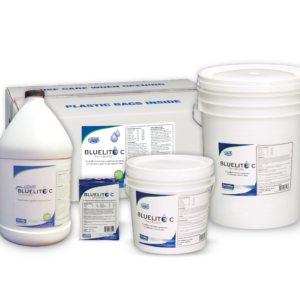
BlueLite® C for Calves
Price range: $2.46 through $201.37 Select options This product has multiple variants. The options may be chosen on the product page